Posts

ASEC proposes key recommendations for 7-member committee on ECG privatisation

Image
 The Africa Sustainable Energy Centre commends the new government for setting up a committee to oversee the privatization of the commercial aspect of the Electricity Company of Ghana (ECG). However, recent comments and suggestions seem to recommend just the need for private sector participation in ECG revenue mobilisation. The truth is that Ghana does not just need the participation of the private sector for revenue mobilisation. The current state of the ECG requires more than assistance in collecting money owed by customers. We need private sector capital and expertise in critical terms to recoup all revenues and achieve operational excellence before transitioning the ECG. This commercial sector privatisation is stringent because of the following areas: 1. Private sector capital and expertise are needed in the installation of smart meters to ensure accurate and real-time billing, reducing revenue losses due to faulty, inaccurate, or bypassed meters. Also, this is needed to up...

Enhancing governance in Ghana’s energy sector through cross-representation

Image
  Effective governance in Ghana’s energy sector depends on transparency, accountability, and efficiency.  A critical step toward achieving these objectives is ensuring that the boards of key entities within the energy value chain include representatives from other major stakeholders.  This cross-representation fosters collaboration, enhances decision-making, and aligns the interdependent roles of various entities, ultimately strengthening sector operations. Such governance reforms are particularly important for improving financial mechanisms like the cash waterfall system and ensuring the long-term sustainability of the energy sector. They also provide valuable insights for ongoing discussions about the privatisation of the Electricity Company of Ghana. Diversity in Board Composition Strengthening Decision-Making Ghana’s energy value chain is made up of key institutions, including the Ministry of Energy, the Public Utilities Regulatory Commission, the Electricity Compa...

The gendered rural energy poverty impacts and climate vulnerability

Image
  Image Source: The Borgen Project Through research and development, it is established that the lack of energy is as unsustainable as the overuse of energy. In our energy-yearning ordeal, energy harness and its security plays a vital role in sustainable development. This, thus manifests so intricately such that, the more we become developed, the more energy we use, and vice versa. One of the most fundamental issues that challenge the very being of us, poverty—widely conceptualised in a number of ways; economic and social. But the dimensions of research that conjuncts poverty and energy in rural regions of Africa is, however minimally explored. Along this breath, the tail of a complex problem which remains an ongoing dent on sustainability waggles—Energy Poverty. Widely defined, energy poverty is the lack of access to sustainable and affordable, clean energy services. Economically, the lack of energy and poverty often go hand in hand, both at national and rural levels, in African r...

From firewood to freedom: Clean cooking as a catalyst for gender equality and development

Image
In many homes across the globe particularly in Africa, the simple act of preparing a meal comes at a heavy price. Traditional cooking methods, which often rely on open fires and inefficient stoves fueled by firewood or charcoal, emit harmful smoke that endangers the health, depletes natural resources, and contributes negatively to climate change.  These practices disproportionately affect women and girls, who bear the brunt of household cooking duties, sacrificing their time, health, and economic opportunities just to put a meal on the table for the family. Clean cooking technologies offer a promising solution not only to a healthier environment but also a path to gender equality, economic empowerment, and sustainable development. With over 2.4 billion people globally still lacking access to clean cooking solutions, achieving universal adoption is both a challenge and an opportunity to address interconnected global goals, including health, climate resilience, and poverty reduction...

ASEC commends Energy Minister’s bold decisions, calls for strategic enhancements

Image
  Ing. Justice Ohene-Akoto, Executive Director The Africa Sustainable Energy Centre (ASEC) has lauded the Energy Minister, John Abu Jinapor for his bold initiatives, particularly the decision to privatize the commercial arm of the Electricity Company of Ghana (ECG) within six months. According to ASEC, this move aligns with the recommendations outlined in its press releases in August 2024, September 2024, and January 2025. ASEC emphasised that the privatization should be limited to the commercial leg of ECG, focusing on revenue mobilization, debt collection, and plugging financial loopholes. The technical operations of ECG, which Ghana has the expertise to manage efficiently, should remain untouched. The energy and sustainability think tank also praised the minister’s decision not to privatize the Volta River Authority (VRA) and Bui Power Authority, two profit-making entities. “These institutions should instead be supported to maximize their profitability for national devel...

Ghanaians voted change: What does it mean for the fight against Galamsey?

Image
On December 7, 2024, Ghanaians voted to remove the ruling party from power. It was clear that the country wanted something different—a change that might also impact the fight against 'galamsey' (illegal mining).  Over the past year, galamsey had once again become one of the biggest issues in Ghana. News outlets like Adom and Citi News constantly reported on how illegal mining was destroying our rivers and water bodies. As a postgraduate student at UCC then, I saw the effects firsthand. Water shortages became common because the River Pra, which supplies parts of Cape Coast and Elmina, was polluted by illegal mining activities. This wasn’t just an environmental issue but a crisis that directly affected our daily lives. In his final State of the Nation Address in January 2025, the outgoing President, Nana Addo Dankwa Akufo-Addo admitted how much the fight against galamsey had cost his government politically. “The fight against galamsey led to the loss of several parliamentary se...

Linking renewables and climate change: Mitigation strategies for Africa's sustainable future

Image
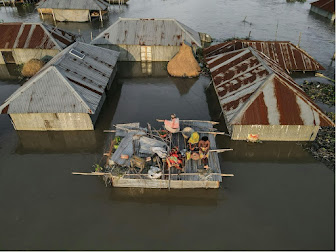
Photo Source: Muhammad Amded Hossain/Pexels  To the African, all separate entities, each existing particulate—on their own, even—participates in a shared energy. Energy, at its proper equilibrium, holds the universe in its balanced state. Within the broader concept of sustainability, energy renewability is a key pillar enshrined under Sustainable Development Goal 7 (SDG7) which aims to also be pivotal in closing the energy access gap, particularly in the African region. This, we essentially consider the backbone to sustainable development and consumption, in that, insufficient energy supply affects all aspects of development, more specifically social, economic, environmental and most especially, the quality of life of many Africans. Renewable energy studies and exploration focuses on increasing sustainable and clean energy usage. As we seek to reduce the emission of carbon dioxide and the dependence on fossil fuels on the continent, renewables become an even more increasingly impor...